
Vitamin Supplements

DNA Tests





Best Genetic DNA Methylation Tests in 2026: Pathway vs Epigenetic Testing Explained
Published 10/02/2026
BackDNA methylation pathway vs epigenetic testing: The differences
Although these tests are often grouped together online, they answer different health questions. Understanding that distinction is essential if you want results that are actionable rather than confusing. This guide explains the two main types of DNA methylation tests, how they differ, and how to choose the right approach based on your goals.
What is DNA methylation? (And why there are two types of tests?)
DNA methylation refers to chemical tags called methyl groups that attach to DNA and influence how genes are expressed. Methylation plays a role in energy metabolism, brain chemistry, cardiovascular health, inflammation, and ageing. The confusion around “methylation testing” exists because methylation can be assessed in two distinct ways:
-
Genetic methylation testing – looks at inherited DNA variants that affect how methylation pathways function
-
Epigenetic methylation testing – measures methylation marks that change over time and are used to estimate biological age
Both are valid. They just measure different layers of biology.
What people mean when they search for a “genetic methylation test”
Most people searching for a genetic methylation test are not looking for an ageing clock. They want to understand how their body processes folate, B vitamins, and neurotransmitters, often after encountering methylation discussions in clinics, podcasts, or programmes that promote methylation-focused DNA testing.
These searches commonly include phrases such as genetic methylation test kit, DNA methylation test, methylation test, or genetic methylation test reviews. In nearly all cases, the underlying question is the same:
Which DNA test actually explains how my methylation pathways work?
Genetic methylation tests
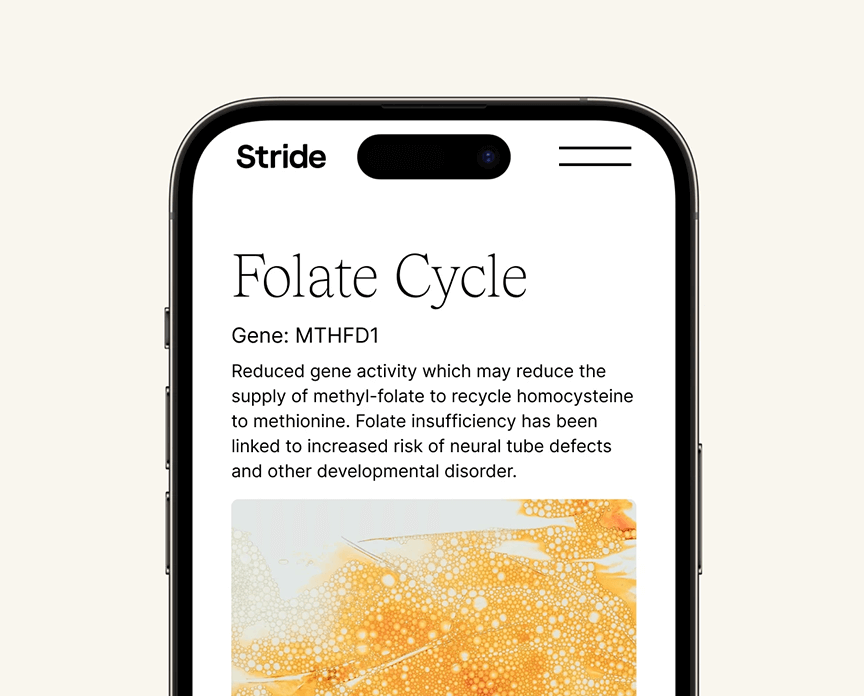
A genetic methylation test (DNA Test Kits for Methylation Pathways) analyses inherited DNA variants involved in one-carbon metabolism and methylation pathways. These variants do not change over time and describe how your methylation system is built.
These tests are sometimes marketed simply as DNA methylation tests, but they are different from epigenetic age testing.
What genetic methylation tests are used for:
-
Understanding folate and B-vitamin processing
-
Personalising supplement forms and doses
-
Supporting neurotransmitter balance
-
Identifying lifelong methylation tendencies
Strengths
-
Highly actionable for nutrition and lifestyle decisions
-
Explains why methylation may be inefficient
-
Stable results that don’t fluctuate with short-term habits
Limitations
-
Do not measure improvement over time
-
Do not estimate biological age
-
Best interpreted alongside functional blood markers
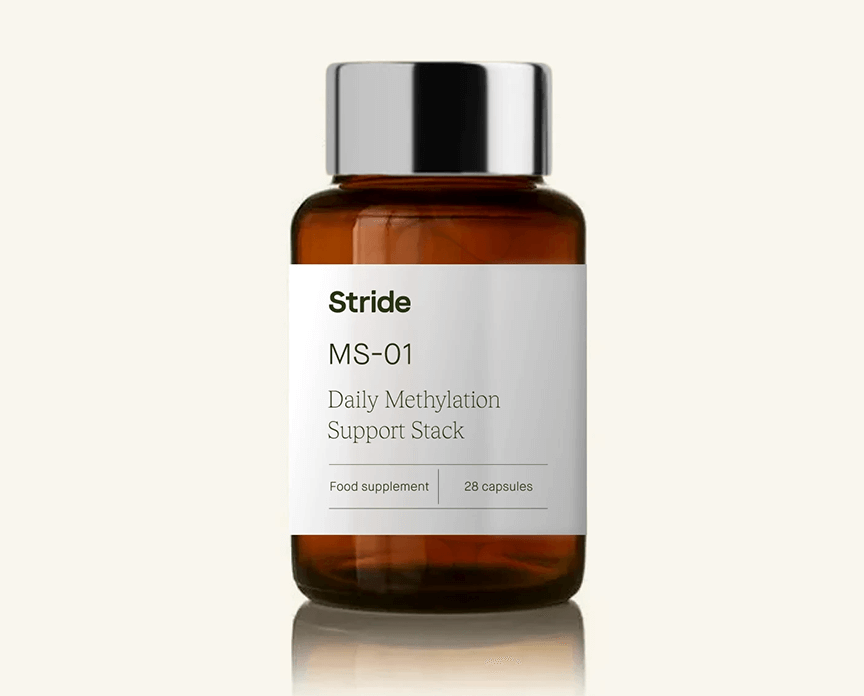
Genetic methylation test kits are widely available globally by companies including Stride, typically using saliva samples collected at home.
Epigenetic DNA methylation tests
Epigenetic methylation tests (Biological Age & Ageing Pace) measure methylation patterns at specific sites across the genome that change in response to lifestyle, stress, illness, and ageing. These patterns are used to estimate biological age and ageing pace.
What epigenetic methylation tests are used for:
-
Estimating biological (epigenetic) age
-
Tracking ageing pace over time
-
Monitoring long-term lifestyle interventions
Strengths
-
Changes over time
-
Sensitive to sleep, stress, and health status
-
Useful for before-and-after comparisons
Limitations
-
Do not explain nutrient or pathway efficiency
-
Limited guidance for supplements
-
Less useful without biological context
Epigenetic tests are best viewed as tracking tools, not diagnostic explanations.
A note on popular “methylation tests” you may see online
Some widely discussed methylation tests, including those promoted by high-profile clinics or health optimisation programmes, focus almost entirely on genetic methylation variants. Reviews often compare test kits, cost, and reporting style, but rarely explain whether the test measures genetic capacity or epigenetic behaviour.
When reading genetic methylation test reviews, a useful question to ask is:
Does this test explain how my methylation pathways are built, or how my body is currently responding? Understanding that difference prevents disappointment and misaligned expectations.
Genetic methylation vs epigenetic methylation: Side-by-side
|
Question |
Genetic Methylation Test |
Epigenetic Methylation Test |
|
Changes over time |
No |
Yes |
|
Estimates biological age |
No |
Yes |
|
Guides supplements |
Yes |
Limited |
|
Explains root causes |
Yes |
No |
|
Useful alone |
Partial |
Partial |
|
Most powerful combined |
Yes |
Yes |
These tests are complementary, not competing.
So what is the best DNA methylation test?
There is no single “best” methylation test — only the best test for the question you’re asking.
-
How fast am I ageing? → Epigenetic methylation test
-
Why might my methylation be inefficient? → Genetic methylation test
-
What should I change, and is it working? → Combine both
For most people, starting with a genetic methylation test provides the clearest, most actionable foundation.
When combining methylation tests makes sense
A common scenario:
-
Someone takes methylated B vitamins after seeing methylation advice online.
-
A genetic test explains whether that approach makes sense for them.
-
An epigenetic test later shows whether their overall biological signals improve over time.
That combination turns supplementation from guesswork into measurement.
Genetic methylation test FAQs
Is a genetic methylation test the same as a DNA methylation test?
In consumer health, these terms are often used interchangeably. Most “DNA methylation tests” sold online are genetic methylation tests, not epigenetic age tests.
Are genetic methylation test kits available internationally?
Yes. Genetic methylation test kits are widely available globally, including in the UK, Europe, and the US.
How much does a genetic methylation test cost?
Costs vary depending on the number of genes analysed and the depth of interpretation. Price alone does not determine usefulness.
Do genetic methylation tests replace blood markers like homocysteine?
No. Genetic tests show capacity; blood markers show real-world function. They work best together.
What is the best methylation test to start with?
For most people, a genetic methylation test is the most practical starting point. Epigenetic testing can be added later for tracking change.
The takeaway
“DNA methylation testing” is not a single test, it’s a category. The key is understanding which layer of methylation you’re measuring, and why. Used correctly, methylation testing can replace generic advice with personalised, evidence-led decisions — and help you track whether those decisions are actually working.